
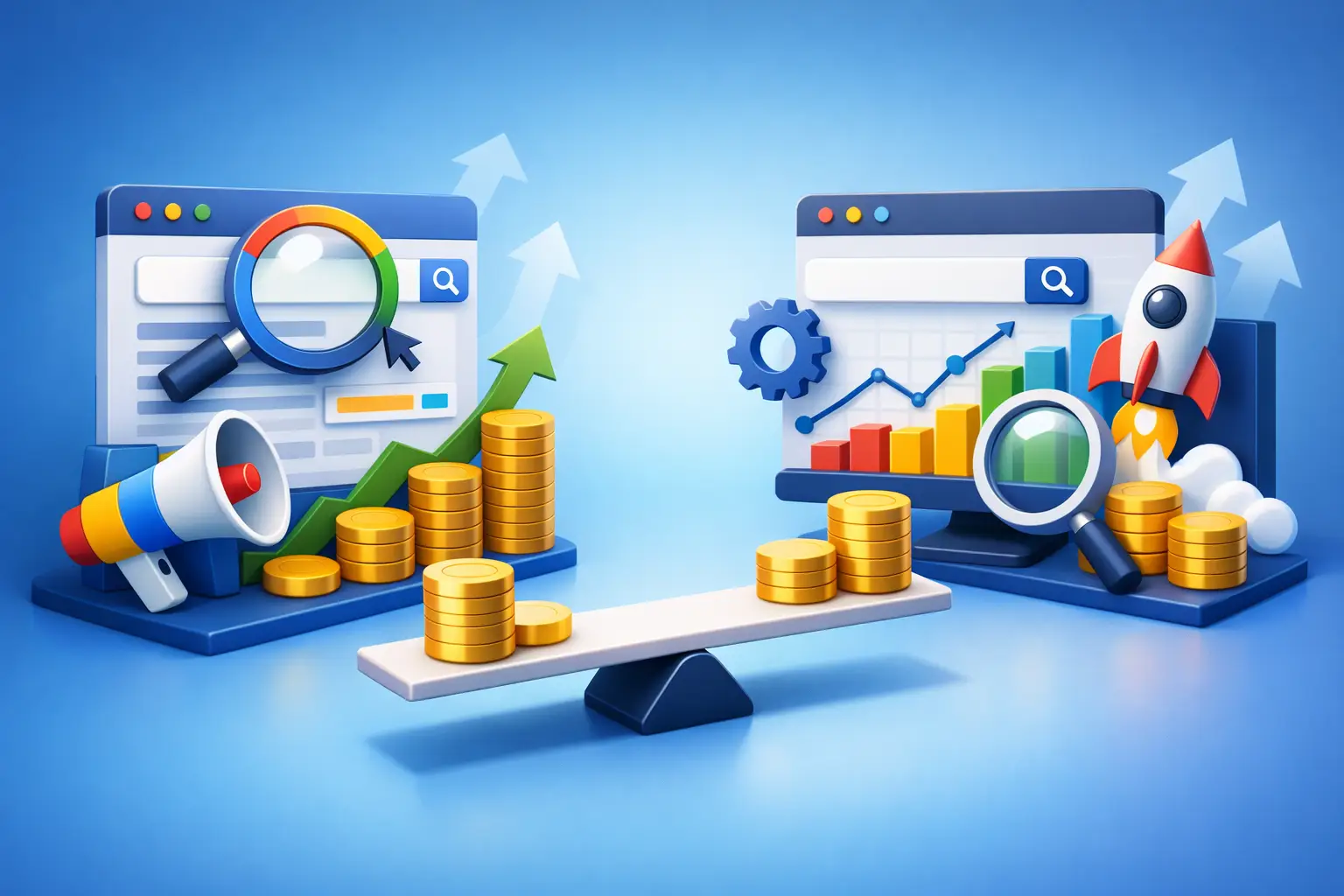
A new business can launch a campaign before lunch and see visitors by dinner. It can also publish its first SEO article today and wait months for meaningful rankings. That is the real tension behind Google Ads vs SEO: one buys attention now, while the other earns visibility over time.
For aspiring freelancers, business owners and digital marketers, this is not a debate about which channel is “better”. It is about choosing the right move for the stage you are in, the cash you can invest, and the outcome you need. If you want skills that create income, you need to know how to use both without wasting budget or effort.
Google Ads vs SEO: the core difference
Google Ads puts your business in front of people searching for a solution by paying for placement. You choose target keywords, write an ad, set a budget and bid against other advertisers. If your campaign is relevant and competitive, your ad can appear near the top of Google’s results almost immediately.
SEO, or search engine optimisation, earns unpaid rankings through useful content, technically sound pages, strong site structure and trust. You do not pay Google for each click. But you do invest time, strategy and often content production before search traffic begins to build.
Think of Google Ads as renting a prime shopfront on a busy street. SEO is like building a shop people return to, recommend and can find without you paying for every person who walks through the door. Renting may get you seen faster. Building creates an asset that can keep working long after the initial work is done.
Neither approach guarantees sales. Traffic only becomes valuable when your offer, landing page and follow-up process make sense for the person clicking.
When Google Ads is the smarter first move
Google Ads is built for speed, testing and clear commercial intent. If someone searches “digital marketing course online”, “plumber near me” or “best bookkeeping software”, they are already looking for an answer. A well-built campaign can put a relevant offer in front of them at the moment their intent is strongest.
This makes paid search particularly useful when you are launching a new offer, promoting a limited-time event, validating whether people will buy, or generating leads for a service business. You can test different headlines, prices, audiences and landing pages in days rather than waiting for an SEO campaign to mature.
For a freelancer, Google Ads can also be a powerful service to offer clients. A local business does not always have six months to wait for enquiries. A carefully targeted campaign can help it generate calls, bookings or quote requests while its organic visibility grows in the background.
But speed comes with a price. Your visibility stops when you stop paying. Competitive keywords can become expensive, especially in industries such as finance, law, property, education and health. If your website converts poorly, more ad spend simply sends more people towards a weak sales experience.
The strongest Google Ads campaigns are not built by choosing broad keywords and hoping. They start with a specific goal: purchases, qualified leads, calls or booked consultations. They use tightly grouped keywords, negative keywords to block irrelevant searches, persuasive ad copy, and landing pages that match the promise in the ad.
A campaign selling a beginner AI course, for example, should not send every visitor to a cluttered homepage. It should send them to a page that clearly explains the outcome, course format, proof of value, price and next step. Relevance is what turns clicks into opportunities.
When SEO creates greater long-term value
SEO is slower, but it can become one of the most valuable growth channels a business owns. A useful page that ranks well for the right search term can attract visitors every week without an additional cost per click. That compounding effect is why SEO matters so much for people building brands, affiliate-style content businesses, service sites and digital product businesses.
The key word is useful. Modern SEO is not about stuffing a phrase into a page repeatedly or publishing thin articles nobody wants to read. Google aims to surface pages that answer the searcher’s question clearly, demonstrate experience and provide a good website experience.
If you run a fitness coaching business, a page targeting “online fitness coach for beginners” should genuinely help a beginner understand the offer, the process, the expected commitment and why the coach is credible. If you create educational content around related questions, such as training plans, nutrition basics and common beginner mistakes, you build topical authority as well as more ways for people to discover you.
SEO is a smart priority when you have a limited ongoing ad budget, a website with valuable topics to cover, and patience to build momentum. It is especially effective when people search repeatedly for information before they buy. A learner might first search “how to become a freelance digital marketer”, then “Google Ads certification”, then “digital marketing course with practical projects”. Helpful content can introduce your brand long before the purchase decision.
There are trade-offs. Rankings can fluctuate, technical problems can hold back a site, and content takes real effort to research, write and improve. SEO is not free. You pay with time, skill, tools or specialist support. The difference is that the value can continue accumulating rather than disappearing the moment a daily budget runs out.
Cost, control and confidence compared
Google Ads gives you more immediate control. You can increase spend, pause campaigns, target locations, adjust bids and see performance data quickly. This is valuable when your business needs fast feedback. It also makes Google Ads unforgiving: poor targeting can burn through money with alarming speed.
SEO gives you less short-term control but more potential durability. You cannot command Google to rank a page tomorrow. You can, however, improve content quality, page speed, internal linking, search intent alignment and credibility over time. Those efforts strengthen the foundation of your whole site.
The right choice depends on the question you need answered. Need leads this month? Start with paid search if you have a tested offer and a realistic budget. Want to lower reliance on advertising over the next year? Build SEO consistently. Have no idea which keywords bring buyers? Use Ads data to learn what people search and convert on, then create SEO content around proven demand.
The best strategy is usually not either-or
The most capable marketers do not treat paid and organic search as rival teams. They use them together with purpose.
Start by identifying high-intent keywords that directly relate to your offer. Use Google Ads to test which terms generate enquiries, sales or strong engagement. Look beyond clicks. A cheap click is meaningless if it never leads to revenue. Track the actions that matter, then calculate whether your cost to acquire a customer leaves room for profit.
Next, use what you learn to guide SEO. If a keyword consistently brings qualified visitors through paid search, it may deserve a dedicated service page, product page or detailed article. Build content around the questions people ask before and after that search. This turns paid campaign insights into a long-term organic growth plan.
At the same time, let SEO reduce pressure on your ad budget. When important pages begin ranking organically, you can reserve paid spend for competitive terms, product launches, remarketing and high-value seasonal campaigns. You are no longer relying on one source of traffic to keep your business moving.
This is where practical digital marketing skill becomes powerful. You are not just learning how to run ads or write blogs. You are learning how to read intent, understand customer behaviour, build a conversion path and make smarter business decisions. That is the kind of execution-focused capability platforms such as DigiGrowth aim to develop.
Mistakes that make both channels fail
The first mistake is chasing traffic instead of outcomes. Ten thousand visitors mean little if nobody joins your list, books a call or buys. Define a conversion before you launch anything.
The second is ignoring search intent. Someone searching “what is SEO” needs education. Someone searching “SEO consultant pricing” may be close to hiring. Give each person the page and message that matches where they are in the decision process.
The third is treating your landing page as an afterthought. Ads and rankings win the click. Your page must earn trust quickly with a clear headline, specific benefits, proof, simple navigation and one obvious action to take.
Finally, do not quit SEO because it is slow or quit Ads because the first campaign was unprofitable. Review the data, refine the offer and improve the customer journey. Growth usually comes from consistent adjustment, not one perfect campaign.
Your next opportunity may come from an ad clicked today or a page you publish this week and nurture for months. Build the skill to recognise which one your business needs now, then take action with confidence.
