
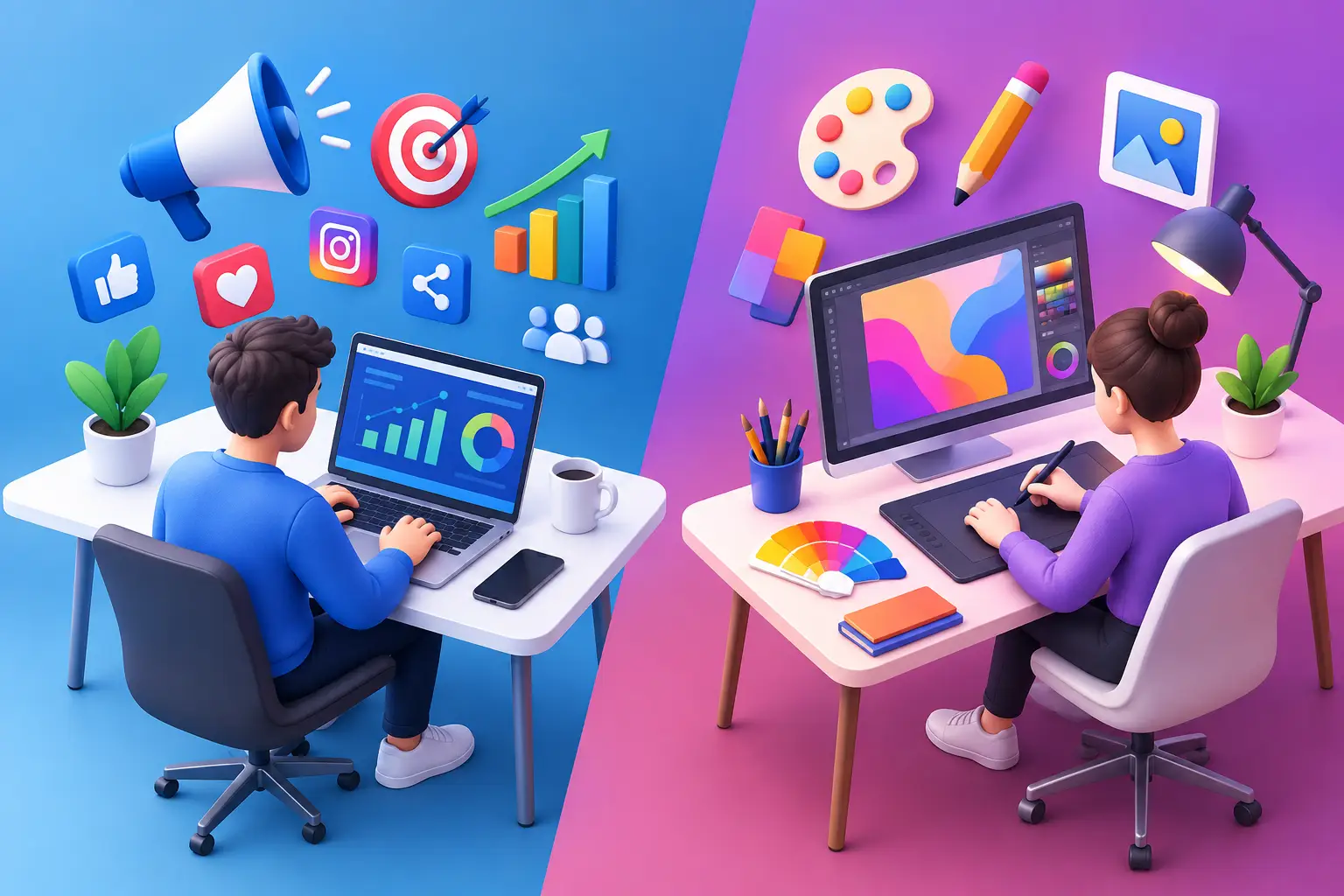
A great-looking Instagram post can stop someone scrolling. But the strategy behind that post – who sees it, why they care, and what they do next – can turn attention into sales. That is the real difference in digital marketing vs graphic design. Both are valuable skills, both can create income, and both can lead to freelance or in-house work. But they solve different problems.
If you are choosing a skill to build a career, do not choose based on what looks easier from the outside. Choose based on the kind of work you want to own, the outcomes you want to create, and how quickly you are prepared to practise.
Digital marketing vs graphic design: the real difference
Graphic design is primarily about visual communication. A graphic designer creates the visual assets that help a brand look clear, credible and recognisable. This can include social media creatives, logos, brand identity systems, brochures, web banners, product packaging, presentations and ad designs.
Digital marketing is about reaching the right audience and moving them towards an action. A digital marketer may plan content, run paid campaigns, improve a website for search engines, write emails, study customer behaviour, build funnels and measure results. The desired action might be a sale, enquiry, booking, download, sign-up or even a stronger community.
Think of it this way: design gives a brand its visual voice. Marketing gives that voice direction, distribution and a commercial purpose.
There is overlap. A digital marketer who understands design can produce stronger content. A graphic designer who understands marketing can create visuals that do more than look polished. Still, the core job is different. One leads with aesthetics and clarity; the other leads with audience growth and business outcomes.
What a digital marketing career looks like
Digital marketing suits people who enjoy problem-solving, psychology, communication and numbers. You do not need to be a maths genius, but you do need to be comfortable asking questions such as: Why is this ad not converting? Which content format creates the most enquiries? What is stopping people from completing a purchase?
The work is varied. In one week, you could be writing short-form content, researching keywords, setting up a paid social campaign, reviewing performance data and creating an email sequence. That variety is exciting for people who dislike repetitive work, but it also means you must keep learning as platforms, algorithms and consumer behaviour change.
Skills that create value in marketing
A job-ready digital marketer needs more than the ability to post on social media. High-value skills include content strategy, copywriting, SEO, paid advertising, email marketing, analytics, lead generation and basic funnel building. AI tools can speed up research, drafting and reporting, but they cannot replace sound judgement about an audience or offer.
Your portfolio should show outcomes where possible. For example, a campaign plan, sample content calendar, SEO audit, email flow or mock ad strategy is more persuasive than simply saying you understand marketing. Employers and clients want evidence that you can connect activity to a goal.
For freelancers, digital marketing can offer multiple service paths. You might manage social accounts for a local business, write conversion-focused emails for an online store, help a consultant generate leads, or run campaigns for a growing brand. Results matter, so strong work can lead to retainers and referrals. The trade-off is accountability: when performance drops, clients will expect you to investigate and improve it.
What a graphic design career looks like
Graphic design suits people with a sharp eye for colour, type, layout and visual storytelling. You might enjoy noticing why one poster feels premium while another looks cluttered, or why a simple design communicates faster than one packed with effects.
A designer’s day often involves interpreting a brief, researching references, developing concepts, refining layouts, receiving feedback and preparing final files for digital or print use. The work can be deeply creative, but it is not only about personal taste. Great designers create work that serves the brand, audience and brief – even when the client’s preference is not your favourite style.
Skills that create value in design
Professional design requires strong foundations in composition, typography, hierarchy, colour theory, branding and visual consistency. You will also need confidence with relevant design software and the ability to explain your choices clearly.
A portfolio is central to getting design work. It should demonstrate range without becoming random. Show branding projects, social media assets, campaign concepts or presentation design that reveal how you solve a visual problem. A clean before-and-after example can be powerful because it makes your thinking visible.
Freelance designers can earn through project work, monthly content packages, brand identity packages and specialised services such as presentation design or e-commerce creative. The challenge is that design can be subjective. Clear briefs, revision limits and confident client communication protect both your time and your income.
Compare the two career paths before you commit
Digital marketing generally has a broader connection to revenue because marketers work directly with leads, traffic, conversions and customer retention. That makes it attractive to businesses of every size, from a tradie growing local enquiries to an online brand selling across Australia.
Graphic design is essential when a business needs a credible visual presence. Yet businesses sometimes treat design as a one-off expense, whereas marketing services are often ongoing. This can make recurring retainers easier to build in digital marketing. It does not mean marketing automatically pays more. A highly skilled designer with a strong niche, excellent positioning and premium clients can out-earn an average marketer.
The better question is not, “Which skill earns the most?” It is, “Which valuable problem can I become excellent at solving?”
Here are the practical differences to weigh up:
- Main focus: Digital marketing drives attention, leads and sales. Graphic design creates visual clarity, trust and recognition.
- Success measures: Marketing is commonly measured through reach, clicks, cost per lead, conversions and revenue. Design is judged by clarity, consistency, usability and how well it supports a brand goal.
- Best starting strengths: Marketing suits curious communicators who can learn strategy and data. Design suits visually minded creators who enjoy detail and refinement.
- Typical portfolio: Marketers show campaign plans, content strategy and measurable improvements. Designers show visual projects, concepts and brand systems.
Which one should you choose?
Choose digital marketing if you want a skill that can lead to many roles: social media executive, SEO specialist, content strategist, paid ads assistant, email marketer or freelance growth partner. It is especially suited to learners who want to support businesses, sell their own offers or build an online side hustle.
Choose graphic design if creating visuals gives you energy and you are willing to develop your craft through repeated practice. It can be a strong path for people who want to build a distinctive portfolio and work across branding, content, advertising or digital products.
If you are still undecided, start with the outcome you want. Want to help businesses find customers and grow revenue? Start with digital marketing. Want to shape how brands look and communicate at a glance? Start with graphic design.
Do not pick both at once just because both appear useful. Learning two large skill sets without practising either can leave you with plenty of course notes and no portfolio. Build one core skill first, complete real projects, then add the complementary skill later.
The strongest long-term move: learn the overlap
Once you have a solid foundation, the overlap becomes a serious advantage. A marketer who can create clean, on-brand campaign assets moves faster and briefs designers better. A designer who understands audience intent, calls to action and conversion principles creates work with more commercial impact.
This is where practical training matters. Theory may tell you what SEO, branding or conversion means. Implementation teaches you how to turn those concepts into a campaign, a portfolio piece, a client offer or a job application. DigiGrowth is built for that shift from learning to earning: develop a market-ready skill, apply it consistently and create proof that you can deliver value.
Your first project does not need to be for a major company. Choose a local café, a family business, a community group or a made-up brand, then treat the work like a real brief. Marketers can create a 30-day growth plan with sample ads and emails. Designers can build a complete visual identity and social media kit. The goal is to finish, assess and improve.
Confidence does not arrive before you start. It is built each time you publish a project, accept feedback, sharpen your skills and prove to yourself that you can create work people will pay for. Pick the path that matches your strengths, begin with one practical project this week, and let your portfolio speak louder than hesitation.
